 YHTECH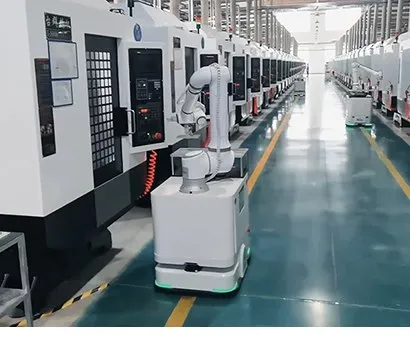
AMR vs AGV: What's the Difference and Which to Choose
Automated Guided Vehicles (AGVs) and Autonomous Mobile Robots (AMRs) both move materials in factories and warehouses, but they work in fundamentally different ways. Understanding the difference is the first step to choosing the right solution.
How AGVs Navigate
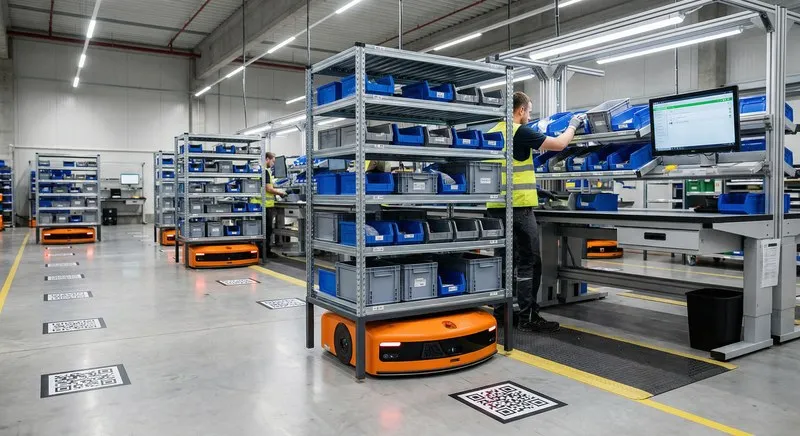
AGVs follow fixed, predefined paths using magnetic tape, QR codes, or laser reflectors. They are predictable and cost-effective in stable, unchanging environments, but changing a route means physically relaying tape or re-mapping reflectors — a costly and time-consuming process.
How AMRs Navigate
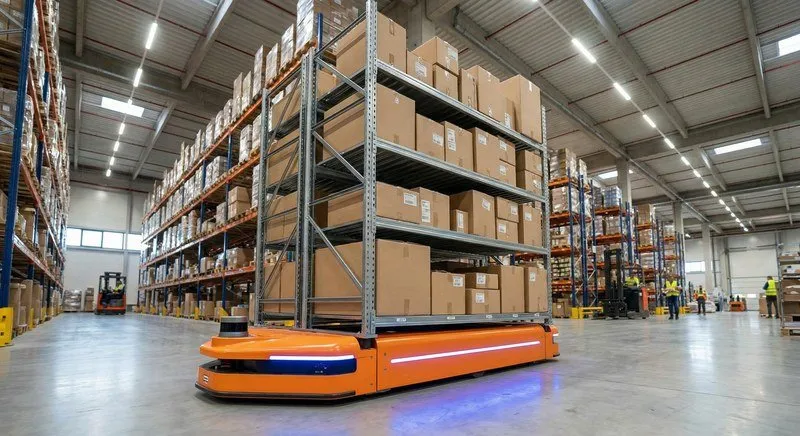
AMRs navigate autonomously using LiDAR SLAM combined with visual fusion. They build a map of the environment in real time, detect obstacles dynamically, and re-plan routes instantly. No infrastructure changes are needed when the layout changes; the robot simply re-maps.
Key Differences at a Glance
Flexibility: AMRs adapt to layout changes in minutes; AGVs require re-installation of guidance infrastructure.
Obstacle handling: AMRs actively avoid people and forklifts; most AGVs simply stop and wait.
Deployment cost: AGVs have lower unit cost but higher infrastructure and modification costs; AMRs cost more per unit but save on infrastructure and reconfiguration.
Fleet coordination: Modern AMR fleets coordinate through centralized scheduling systems, enabling dynamic traffic management and task allocation.
Which Should You Choose?
Choose an AGV when routes are fixed, volumes are stable, and you want the lowest upfront cost. Choose an AMR when your warehouse is dynamic — frequent layout changes, shared aisles with people, or fluctuating task flows. Many facilities run both: AGVs for repetitive line-side delivery and AMRs for flexible goods-to-person picking.
YHTECH offers both AGV compound robots and AMR warehouse robots with laser SLAM + visual fusion navigation, MES/WMS integration, and multi-robot fleet scheduling. Contact our engineers for a free material-flow assessment.