 YHTECH Home
EU为农场机器人带来新的安全要求的规则
EU Rules Bring New Safety Requirements for Farm Robots
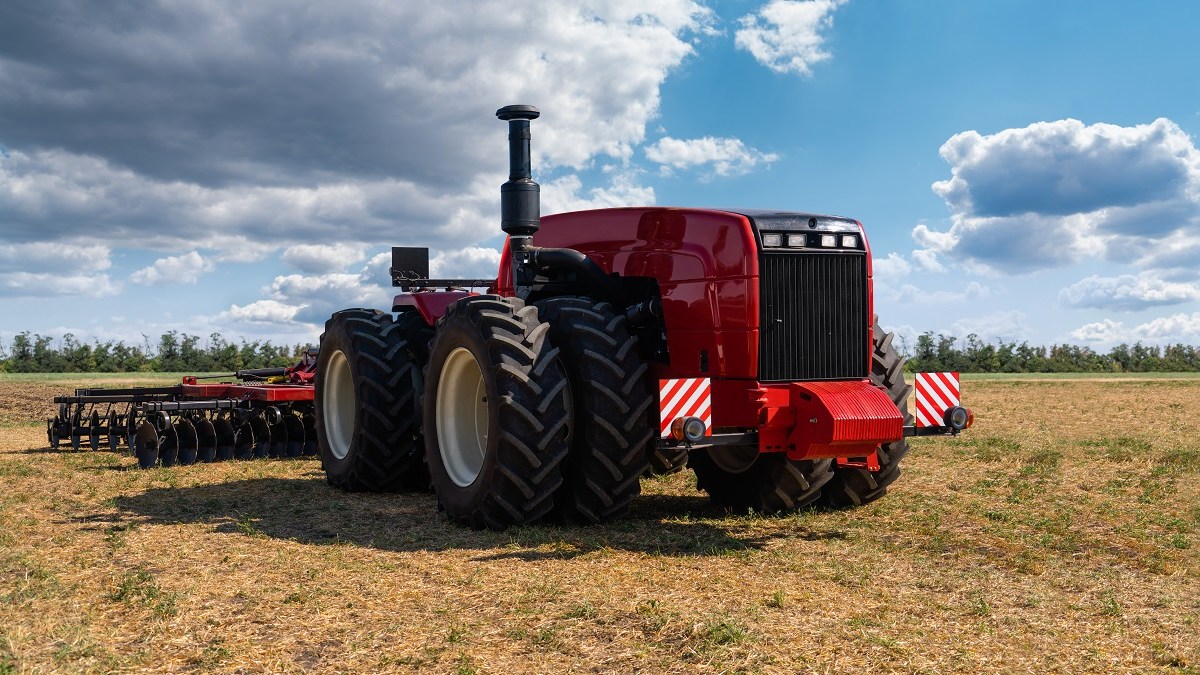
New EU regulations will tighten safety and compliance requirements for farms deploying AI-powered robots and autonomous machinery. The post EU Rules Bring New Safety Requirements for Farm Robots appeared first on EE Times .
全文内容 Full Text
Digitalization and advancements in new technologies are making farming operations smarter, more automated, and more sustainable. But are these technologies explicitly safe to implement in agricultural settings? There are already autonomous systems, including robots, drones, automated tractors, and AI-guided machines in the field that perform seed planting tasks, selective chemical spraying, mechanical weed control, milking, and feeding animals, and some prototype robots are now even picking apples in orchards. A lot of these are self-navigating and work with little-to-no human input. These machines and robotic systems make farming operations more efficient and help reduce costs. But as machines ‘think’ and operate with less and less human input, an obvious question arises: Can they be trusted as much as when humans are fully in control? The answer is not straightforward. While the technical aspects to consider are fairly well-established today, the definition of an autonomous system and who is responsible if something goes wrong is a lot more ambiguous and less clear-cut. Mandatory EU regulations coming into effect soon are set to quell this ambiguity and improve overall safety on farms where robots and other autonomous and AI-driven systems are part of everyday operations. AI-driven and autonomous technologies are being deployed across a range of farming activities, from crop cultivation and soil analysis to irrigation management, fertilizer and pesticide spraying, weed removal, crop monitoring, field mapping, apple picking, and animal husbandry. Some tasks can be handled by a single robot, while others require a swarm of robots to cover a wider area. Applications include autonomous tractors that operate in fields at night, robotic sprayers that self-navigate rows of crops or trees, or a drone swarm overhead equipped with advanced sensors to monitor plant growth, identify growth-related problems, and spot potential threats to plant and soil health. Many of these systems are driven by AI or have AI-enabled capabilities that help them navigate the field autonomously. AI allows these robotic and autonomous systems to process data a lot faster and handle larger volumes of data than systems without AI or machine learning (ML). This enables more efficient planning, earlier detection of potential problems before they become a big issue (including issues that might have otherwise been missed), and predictive capabilities that support a wide array of farming operations. However, replacing human workers in the field with AI-enabled machines doesn’t mean that there are fewer risks; it simply introduces different risks that need to be taken into account. Autonomous systems operating in the field face a number of inherent technical risks. What if fail-safes stop working and the robot hits a person? What if collision-free navigation is impacted by misaligned sensor fusion or dust on the sensor? Will the uneven terrain affect the locomotion and stability of some robots, making them unsafe? Many of these technical aspects have been addressed, but anchoring the safety of autonomous systems in standards and regulations requires a lot more clarity around what an autonomous system actually is. More clarity is also needed on responsibility. Autonomous systems equipped with AI do not remove responsibility from the farm if something goes wrong, so farmers need clearer guidance and must understand that they are not immune to safety infractions if the technology goes awry. The current EU Machinery Directive and harmonized standards, such as ISO 12100:2010, do not use the term ‘autonomous’. As with ‘artificial intelligence’, the term ‘autonomous’ is open to interpretation, and European regulations have suffered the same fate, with many different interpretations of what an ‘autonomous’ system is. In the automotive sector, there is a sliding scale created by the Society of Automotive Engineers (SAE), which has been widely adopted across industri中文摘要
新设EU条例将加强部署农场的安全和遵守要求;AI-powered机器人和自动机械。EU规则为农场机器人带来新的安全要求EE时间
Related YHTECH Products
Related Reading
原始站点无法访问时,可直接阅读上方全文缓存(AI Agent 已抓取)。
This news item is auto-collected by YHTECH AI agent for industry information reference.