 YHTECH Home
从精密到自主农业:边缘的作用AI和机器人学
From Precision to Autonomous Agriculture: The Role of Edge AI and Robotics
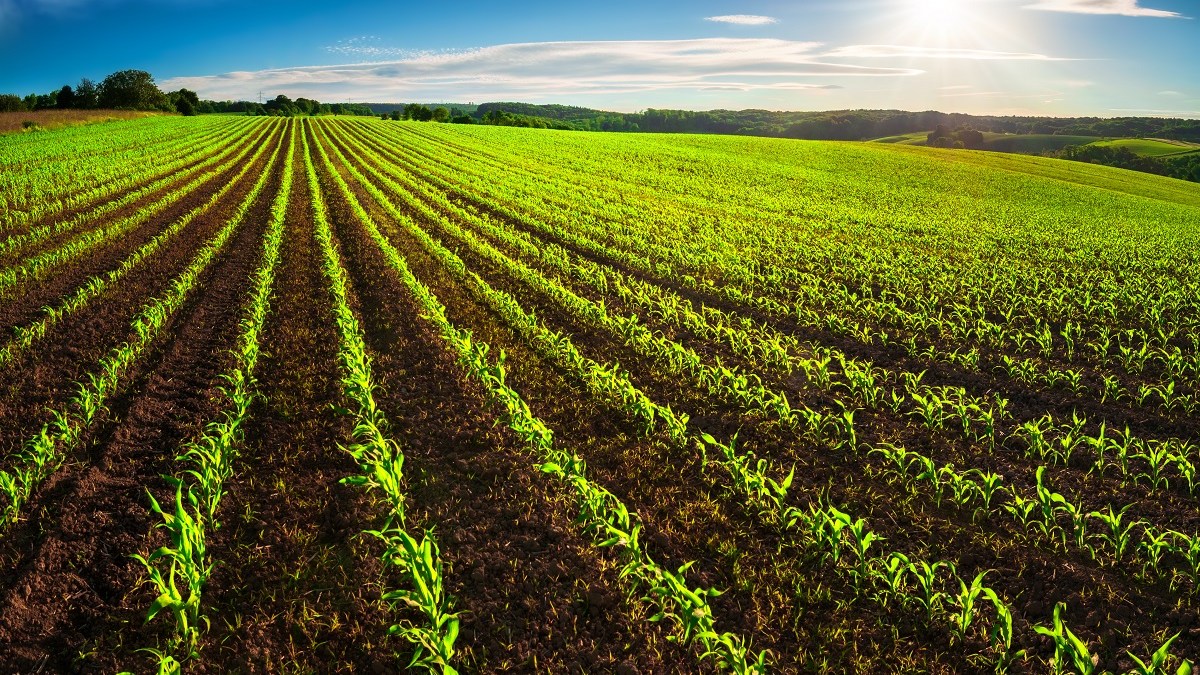
Edge AI and robotics bring greater precision and autonomy to agricultural machinery, from targeted spraying to harvesting. The post From Precision to Autonomous Agriculture: The Role of Edge AI and Robotics appeared first on EE Times .
全文内容 Full Text
Over the past decade, agricultural digitalization has improved how farmers monitor crops, soil conditions, weather, and equipment performance. Satellites, drones, connected machinery, and ground-based sensors now provide increasingly detailed information about farming operations. With advances in AI, embedded computing, and robotics, this information is also being used to control agricultural equipment directly, supporting a move from precision agriculture toward more autonomous farming. Modern agricultural equipment integrates a broader range of sensing technologies. RGB cameras can identify crops, weeds, and obstacles. Thermal imaging can detect variations in temperature and moisture. Multispectral and hyperspectral imaging can assess vegetation health, nutrient status, and certain disease indicators. LiDAR and radar provide additional information on terrain, distance, and surrounding obstacles. As these technologies mature, the spatial scale of agricultural decision-making continues to shrink. Management that was once applied at field level increasingly targets individual crop rows, square meters, and, in some applications, individual plants. This level of granularity places greater demands on embedded computing and actuator control. Cameras must continuously capture images as machinery moves, while AI models identify plant type, position, and condition within a short processing window and pass the results directly to nozzles, mechanical tools, or other actuators. Precision spraying already demonstrates this approach. Vision systems can identify individual weeds and activate selected nozzles for localized treatment, and commercial systems have already been deployed across millions of acres. As camera counts, image resolution, and the number of recognized classes continue to increase, agricultural sensing is moving toward a tighter sensor-to-compute-to-actuator loop. The increasing volume of sensor data drives greater adoption of onboard computing. Cloud platforms remain important for farm management, historical analysis, and model training, but many agricultural operations require decisions to be made immediately. Connectivity can also be limited in remote farming areas, making continuous dependence on cloud processing impractical. Edge AI allows agricultural machinery to process sensor information locally and respond directly to its surroundings. This is particularly important for applications such as obstacle detection, autonomous navigation, precision spraying, and robotic harvesting, in which delays between perception and physical action can affect performance. The electronic architecture of advanced agricultural machinery increasingly shares characteristics with autonomous vehicles. Both require onboard systems for localization, environmental perception, path planning, and motion control. Agricultural equipment also needs to recognize task-specific information, such as crop type, fruit maturity, and the position of weeds, before controlling implements such as sprayers, cutting tools, or robotic arms. As these functions become more sophisticated, computing performance, energy efficiency, and thermal management will become increasingly important. Cloud-based services will continue to support software updates, fleet management, and longer-term optimization, while time-sensitive control functions will remain on the machine. Autonomous tractors and agricultural robots integrate larger and more diverse sensor suites. Multicamera systems can provide nearly 360° coverage, while LiDAR and radar can supplement vision in orchards, vineyards, and other environments where dense vegetation creates more severe occlusion. RTK GNSS remains an important foundation for agricultural guidance and automated driving, but tree cover, complex terrain, multipath effects, and temporary signal degradation can affect positioning stability. IMUs, inertial navigation systems, wheel odometry, visual odometry, and other localization technologie中文摘要
边缘AI从定点喷洒到收割,机器人为农业机械带来了更高的精度和自主性。AI机器人首次出现于EE时间
Related YHTECH Products
Related Reading
原始站点无法访问时,可直接阅读上方全文缓存(AI Agent 已抓取)。
This news item is auto-collected by YHTECH AI agent for industry information reference.