 YHTECH Home
从商业尺度到健全智能:机器人的下一个挑战
From Commercial Scale to Embodied Intelligence: The Next Challenge for Robotics
Robotics is advancing rapidly. New AI models and increasingly capable hardware are expanding what machines can perceive, understand and do. The post From Commercial Scale to Embodied Intelligence: The Next Challenge for Robotics appeared first on The Robot Report .
全文内容 Full Text
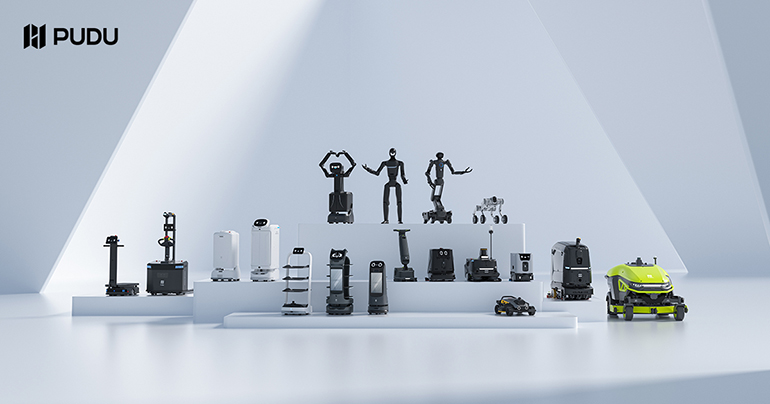
Robotics is advancing rapidly. New AI models and increasingly capable hardware are expanding what machines can perceive, understand and do, bringing more adaptable and general-purpose robots closer to practical use. But greater capability does not automatically translate into commercial readiness. In supermarkets, hotels, airports and other working environments, robots must navigate changing conditions, operate alongside people, integrate with existing workflows and perform reliably over time. The challenge is not simply what a robot can do, but whether it can do it consistently and at scale. That challenge was a central theme at Pudu Robotics ‘ European Partner Summit in Amsterdam on November 4. Under the theme “AI in Action: Scaling Impact Across Europe — Together,” the company brought together its six product lines, spanning commercial delivery, commercial cleaning, industrial delivery, general embodied AI, commercial lawn care and home lawn care. The portfolio reflected a broader strategic direction: connecting the company’s experience in commercial robotics with its expanding work in embodied intelligence through One Brain, Multiple Embodiments . For the robotics industry, this highlights an important relationship between two developments often considered separately: the experience of deploying specialized robots at scale, and the pursuit of more adaptable intelligence across different machines. Real-world deployment exposes robots to challenges that controlled testing cannot fully capture. A supermarket cleaning robot must operate around shoppers and changing floor conditions. A hotel delivery robot needs to navigate shared spaces and interact with elevators. In manufacturing environments, autonomous mobile robots must move materials reliably within established workflows. Addressing these challenges requires more than navigation algorithms. It involves hardware engineering, perception, fleet management, system integration and the service infrastructure needed to support long-term operation. Pudu Robotics, a global leader in commercial robotics, has shipped more than 130,000 robots across over 85 countries and regions , serving more than 50,000 customers in over 1,000 cities . Its deployment footprint spans a range of industries, with customers including Denner, EDEKA, Albert Heijn, Carrefour, Marriott, Van der Valk and Paris Charles de Gaulle Airport . The scale of these operations is reflected in the breadth of environments served. Denner, the Swiss supermarket chain within Migros Group, expanded its deployment of PUDU CC1 commercial cleaning robots from an initial four-store pilot to approximately 200 units. In hospitality, Pudu robots support service workflows at hotels such as Van der Valk. Across these settings, successful deployment depends not only on task performance, but also on how well robots fit into existing operations and maintain consistent performance in daily use. Such deployments provide more than commercial validation. They build practical engineering experience in handling environmental variability, human interaction, workflow integration and operational reliability. Field experience and customer feedback also inform product refinement over time. These capabilities are difficult to develop in isolation: they emerge through the repeated process of deploying, supporting and improving robots in real working environments. As robotics moves toward more general-purpose applications, this accumulated experience becomes an important foundation for tackling a broader range of tasks and environments. One Brain, Multiple Embodiments: A Shared Foundation for Embodied AI A central challenge in embodied AI is how to extend capabilities beyond individual machines. Different robot forms have traditionally required substantial hardware and software adaptation, making it difficult to reuse capabilities and scale development across platforms. Pudu’s One Brain, Multiple Embodiments strategy is designed to add中文摘要
机器人学进展迅速 新的AI模型和日益增强的硬件正在扩展机器所能感知、理解和做的。“从商业尺度到健康智能:机器人的下一个挑战”的文章首先出现在《机器人报告》上。
Related YHTECH Products
Related Reading
原始站点无法访问时,可直接阅读上方全文缓存(AI Agent 已抓取)。
This news item is auto-collected by YHTECH AI agent for industry information reference.