 YHTECH Home
可以吗?AI特工真的要左转芯片设计吗?
Can AI Agents Really Shift Chip Design Left?
Agentic AI promises to automate more of the chip flow, but integration with EDA tools and capturing decades of engineering expertise are non-trivial. The post Can AI Agents Really Shift Chip Design Left? appeared first on Semiconductor Engineering .
全文内容 Full Text
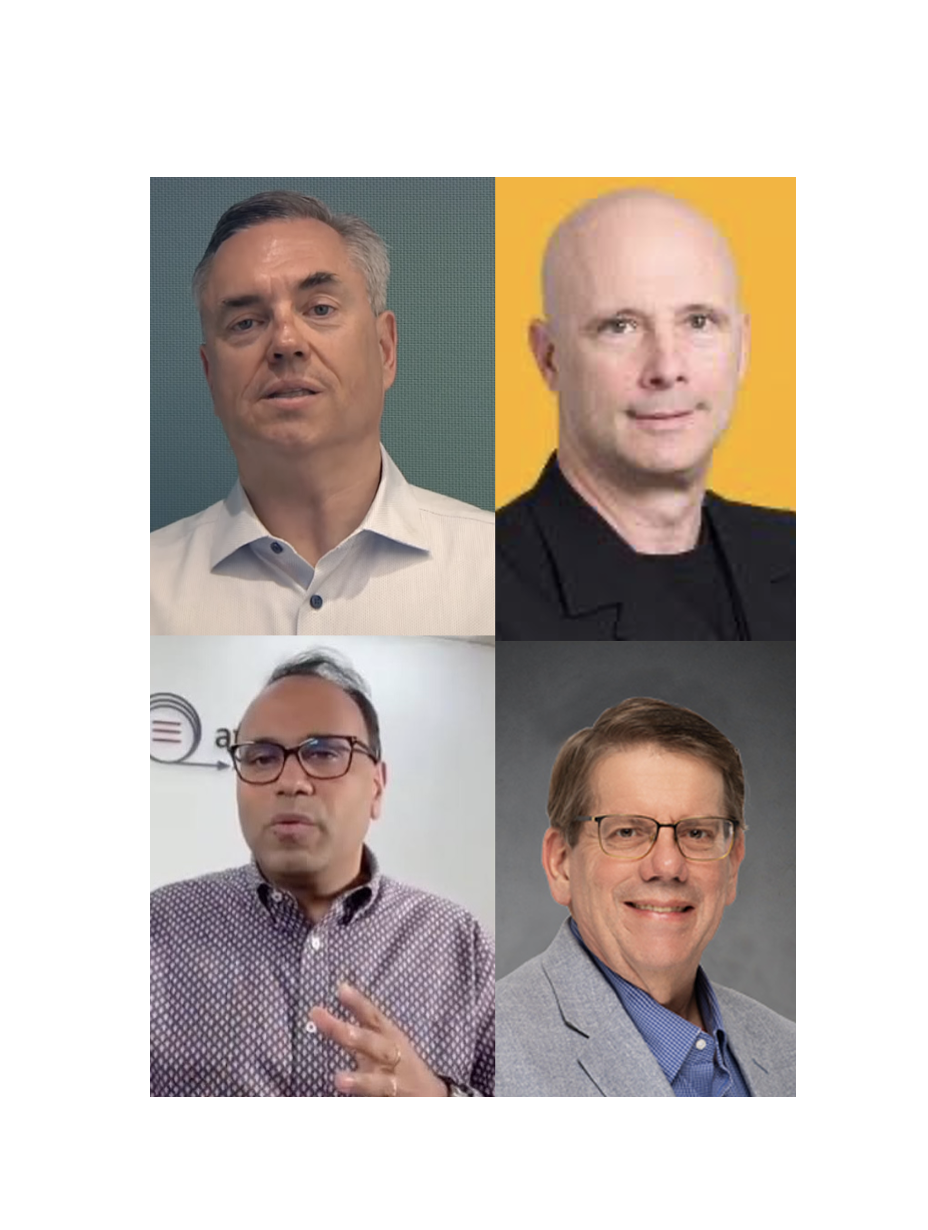
Agentic AI promises to automate more of the chip flow, but integration with EDA tools and capturing decades of engineering expertise are non-trivial. Experts at the Table : AI agents are moving into more parts of the chip design flow, but connecting them across different tools and processes remains a challenge. Questions also remain about how to capture decades of engineering expertise, protect proprietary design data, and keep costs manageable. Semiconductor Engineering sat down to discuss these issues with Frank Schirrmeister, executive director of strategy programs and system solutions at Synopsys ; Ronen Laviv, vice president of business development and strategic partnerships at Hiveware; Jack Berg, vice president of business development at Silvaco ; Ashish Darbari, founder and CEO of Axiomise . What follows are excerpts of that conversation. To view part one of this discussion, click here . Part two is here . L-R: Silvaco’s Berg; Synopsys’ Schirrmeister; Axiomise’s Darbari; Hiveware’s Laviv. SE: If AI agents are modifying code, and you keep updating AI models and agents, how much can you really shift left? Darbari : This is going to be a new methodology direction the industry will be taking, much like UVM, where you combine these different flows together. How do you combine all the agents together? I don’t get a sense that anybody really knows today how this combination is going to work. From what I have seen in different presentations, they’re still looking at how these things unfold. A lot of agentic AI companies lack the field experience of having seen these problems firsthand, so what they’re building is not what the consumer wants. In many cases, the big consumers are building their own stuff because they know what they want. They have the field experience. They have data from many years. So, where will the big EDA vendors go to streamline this, and how will that shape the end use? I don’t know. Laviv : One of the challenges with emulation is that when running in co-simulation mode, the simulation slows down. Maybe, instead of having UVM or other languages that slow it down, AI will get its own language and get SystemVerilog RTL synthesizable code that you can put in the machine. Then you’ll need less of the software, and you can run faster in emulation. I’m not sure yet if the methodology would change quickly, but UVM might not stay forever. Darbari : That’s what Nvidia’s head of GPU said at DVCon U.S., isn’t it? The formal is replacing simulation, or is going to replace simulation. I’m less interested in how each of these individual technologies works with each other, but I’m very interested in whether all of this adoption will lead to a coherent story. Schirrmeister : You have lifecycle, manufacturing, digital implementation, functional verification, and you have specification engineering. Making sense of it is the light bulb — making sure it works, getting it to layout, getting it into the actual physical silicon and 3D, and then observing it during the lifecycle. Each of these flows has many sub-components. Functional verification to emulation is like one of the five. There is virtual prototyping, formal, simulation, emulation, and prototyping. Everybody gets their own agent. So you have an agent doing something localized. Now you start getting an agent that orchestrates these things together as a functional thing, and then you get an agent that connects to the front end. This is an onion of agents, with more and more layers on top. EDA vendors are all saying we have Level 5 stuff, and there’s truth to that within the scope of the operating domain. Darbari : But who’s going to pay for all this? Do the small companies have the budget to tokenize their banks and run all of this? Schirrmeister : Do you mean the guys building the product, or the guys building the tools? Darbari : The ones running the product. These are the consumers. They would need to pay for the tokens. I have a feeling that only the big中文摘要
Agentic AI承诺使更多的芯片流自动化,但与EDA工具以及几十年的工程专业知识是非三角性的。AI代理真的移动芯片设计左?
Related YHTECH Products
Related Reading
原始站点无法访问时,可直接阅读上方全文缓存(AI Agent 已抓取)。
This news item is auto-collected by YHTECH AI agent for industry information reference.