 YHTECH Home
食物机器人2.0:为什么这次可能不同
Food robotics 2.0: why this time could be different
Food robotics is entering a new era as companies shift from consumer-facing robot restaurants to B2B automation that help food manufacturers, restaurants, and grocery retailers improve productivity, ...
全文内容 Full Text
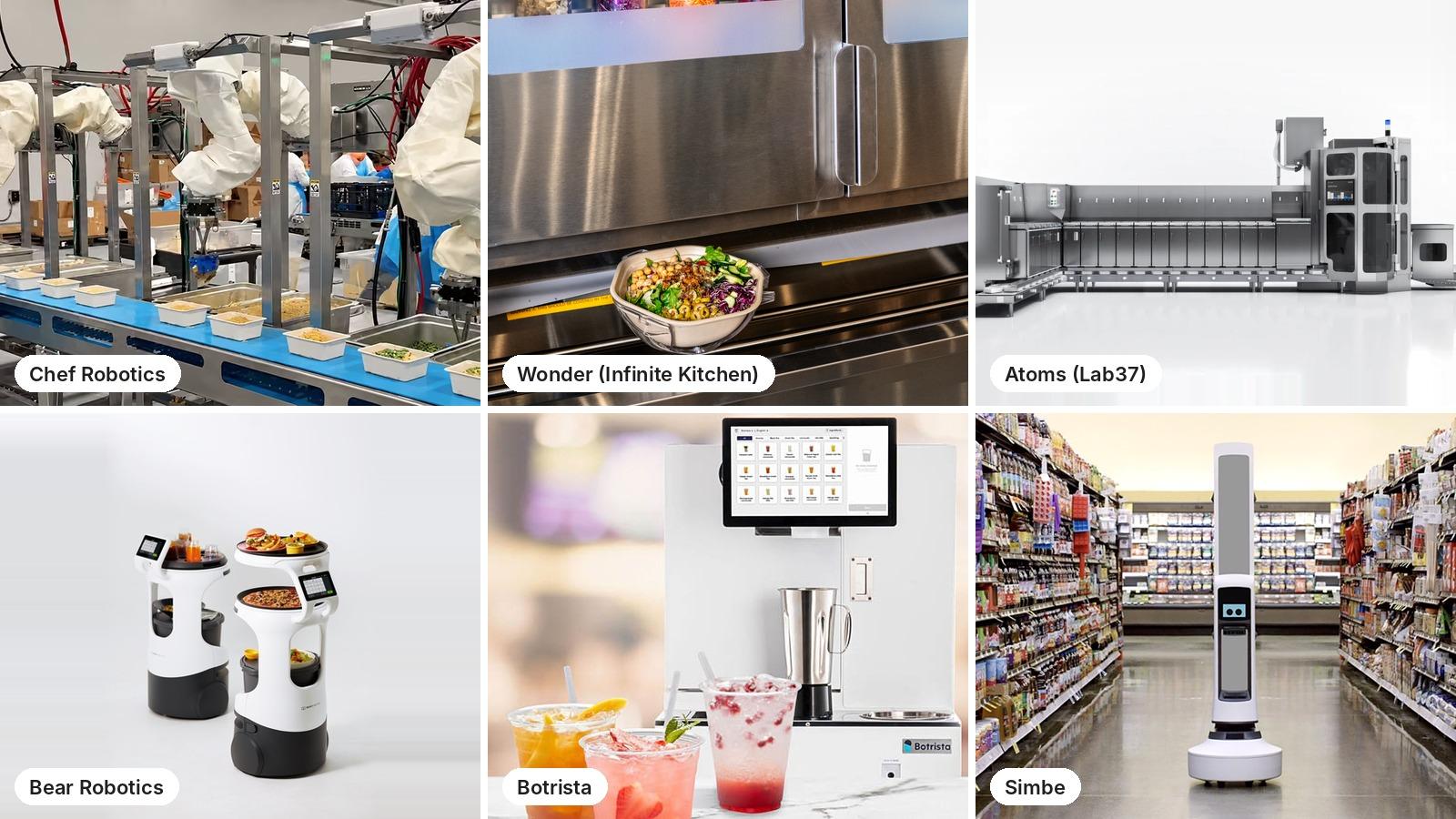
There are a range of robots working in the food and retail industries today. | Source: Chef Robotics A few years ago, a robot making lunch was enough to make headlines. We quickly learned a robot can definitely make lunch. But the question remained: could it make a business work? That question followed the first wave of food robotics. In food robotics 1.0, several companies set out to sell meals made by robots directly to customers. This meant they were directly in the food business, selling burgers, sandwiches, and pizzas. They had to develop the technology while giving people a reason to keep ordering: good food, the right price, and convenience. Many struggled to make those pieces work together. It was a tall order to run a restaurant business (with all the difficulties of brand and culinary) and run a robotics business. These early setbacks left the industry with a question hanging over it: could food robotics ever live up to its promise? The existing challenges in the food industry that required automation never went away. Manufacturers still had meals to assemble, and restaurant teams still had orders to fill with hard-to-staff shifts. That’s where Food Robotics 2.0 is taking shape around those everyday needs. It’s driving new generations of robots that are helping teams prepare meals, make drinks, move food through dining rooms, and monitor grocery shelves, while improving productivity, reducing operating costs, and delivering a measurable return on investment. The focus is on B2B (selling robots to food companies that are already great at brand and culinary) vs. B2C (selling food directly to consumers). The value comes from doing that work consistently and at a cost that makes sense. This is what makes the food robotics renaissance tangible. Companies like Chef Robotics , Wonder , ATOMS , Botrista , Bear Robotics , and Simbe are shaping this new wave across manufacturing lines, restaurant kitchens, beverage counters, dining rooms, and grocery stores. The food and retail robotics industry is having a Renaissance. The once-eschewed category now sees some high-profile founders focusing on it: This piece looks at where these robots are deployed today, the work they’re doing, and what it takes to scale from individual installations to large-scale deployments. To understand the food robotics market, it’s useful to look at where different food robotics companies operate and what problems they solve. Each environment requires different levels of speed, footprint, and flexibility. Let’s take a look at what’s unique about each operating environment: Rice clumps, sauces drip, and no two pieces of chicken look quite the same. Now imagine in a food manufacturing unit, portioning those ingredients into thousands of trays, with recipes, trays, and portions changing throughout the day. That is everyday work on a high-mix meal assembly line. Workers repeatedly scoop, pick, and place ingredients, and staffing this work is a persistent challenge, with annual labor turnover regularly exceeding 150% . Fixed automation, such as depositors, works well for consistent ingredients at high volumes. Handling thousands of SKUs and frequent changeovers between production runs calls for more flexibility. Chef Robotics builds robots that handle this variability on existing assembly lines. The focus is domain generality within food manipulation : adapting across ingredients and meal configurations while maintaining throughput, quality, and reliability. Chef robots are deployed at scale across North America and Europe and have completed more than 145 million servings in production. Bowl assembly connects several steps: dispensing ingredients, accommodating modifications, and preparing orders for handoff. Wonder and Atoms are incorporating this workflow into broader food businesses. Wonder operates food halls that bring multiple restaurant brands together for delivery, pickup, and dine-in. In December 2025, Wonder acquired Spyce, the Sweet中文摘要
食品机器人正在进入一个新时代 公司从消费型机器人餐厅 转向B2B自动化帮助食品制造商,餐馆,和杂货零售商提高生产力,.
Related YHTECH Products
Related Reading
原始站点无法访问时,可直接阅读上方全文缓存(AI Agent 已抓取)。
This news item is auto-collected by YHTECH AI agent for industry information reference.