 YHTECH Home
Texas技术接收用于进一步半导体创新的1 900万美元赠款
Texas Tech Receives $19 Million Grant to Further Semiconductor Innovation
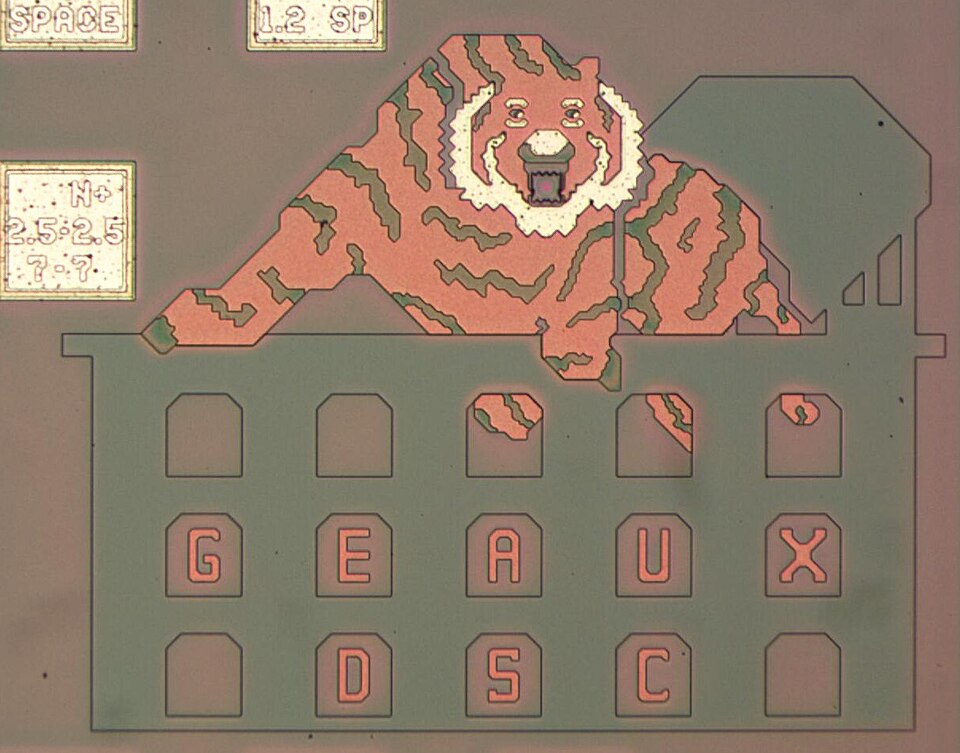
The grant will support Texas Tech’s next-generation computing cluster as the university pushes and transforms semiconductor development. The post Texas Tech Receives $19 Million Grant to Further Semiconductor Innovation appeared first on Semiconductor Digest .
全文内容 Full Text
Home » Texas Tech Receives $19 Million Grant to Further Semiconductor Innovation Texas Tech University ’s Edward E. Whitacre Jr. College of Engineering received an additional Texas Semiconductor Innovation Fund (TSIF) award of over $19 million toward the university’s continued pursuit of semiconductor innovation. “We are grateful to Governor Abbott and state leaders for this investment in Texas Tech University and the state’s future,” said Texas Tech President Lawrence Schovanec . “This support will expand our ability to apply advanced computing to challenges that matter to Texas while preparing students to lead in an increasingly technology-driven world.” Texas Tech previously earned TSIF awards to develop a new clean room and to develop wide/ultrawide bandgap semiconductors for use in harsh environments . Conventional semiconductor design relies heavily on physics-based modeling. While this is an accurate setup, it can be computationally intensive and stymie the innovation process. The funding of this award will help Texas Tech establish a next-generation computing cluster in Lubbock. Computing clusters leverage a network of interconnected high-performance servers designed to function as a single unified system to handle massive, parallel workloads. This project will integrate artificial intelligence (AI) with high-fidelity simulation data and experimental results. This should shorten development cycles for next-generation semiconductor devices and materials. Roland Faller , dean of Whitacre College of Engineering, said Texas Tech will be one of the first universities to have access to the newest generation of Nvidia chips to power the cluster. “This specific award enables us to do things which we otherwise would not be able to do,” Faller said. “The impact is what really excites me. What I hope comes out of this award is exciting new research, not just with our faculty in engineering, but other fields across the university and potentially even collaborations with industry.” Some of those projects include AI-driven materials discovery and modeling, AI-enabled epitaxial growth of ultrawide-bandgap semiconductors and investigating advanced semiconductor devices to target performance and efficiency. Undergraduate and graduate students can expect this award to open the doors for transformative interdisciplinary research, training and professional experiences as they prepare to enter the semiconductor workforce. “Ultimately, these experiences will help prepare a highly skilled workforce to support Texas’ growing semiconductor industry,” Li said. “This is truly a university-wide team effort, and the successful implementation of this research infrastructure reflects the strong spirit of collaboration across Texas Tech.” Shannon, writes, edits and produces Semiconductor Digest’s news articles, email newsletters, blogs, webcasts, and social media posts. She holds a bachelor’s degree in journalism from Huntington University in Huntington, IN. In addition to her years of freelance business reporting, Shannon has also worked in marketing and public relations in the renewable energy and healthcare industries.中文摘要
赠款将支助Texas Tech的下一代计算集群,随着大学的推进和转变半导体的发展。Texas在半导体文摘上首次出现。
Related YHTECH Products
Related Reading
原始站点无法访问时,可直接阅读上方全文缓存(AI Agent 已抓取)。
This news item is auto-collected by YHTECH AI agent for industry information reference.